In the competitive landscape of commercial spaces, operational excellence relies heavily on facility maintenance. Among all shared spaces within a corporate office, hotel, or retail complex, the public restroom is often the most difficult to keep hygienic and functional. And many property managers struggle to maintain high sanitary standards when dealing with high foot traffic and unpredictable user habits.
Hence, property owners need to look beyond basic maintenance routines to protect their brand reputation and ensure visitor safety. Investing in modern commercial washroom solutions helps ensure that your property remains hygienic even during peak traffic hours. These modern fixtures help your maintenance staff work more efficiently and reduce product waste.
Furthermore, in this blog, we will highlight top public washroom hygiene challenges and also present their solutions.
The Invisible Crisis: Why Public Washroom Hygiene Matters
The condition of a public restroom significantly serves as a silent indicator of business values. A poorly maintained facility can severely damage visitor trust and compromise occupant safety. Here’s why public washroom hygiene matters:
- Increases Health Risks: High-traffic restrooms are known to be the primary zones for cross-contamination, which compromises both visitors’ and employees’ hygiene and increases health risks.
- Damages Property Reputation: Visitors judge the operational standards of your entire organization based on the cleanliness of your shared facilities.
- Lowers Property Value: Poorly maintained restrooms accelerate the wear of your assets and ruin the property value.
- Increases Repair Costs: Untreated moisture and waste buildup cause plumbing blockages and damage expensive bathroom fixtures over time.
- Waste Cleaning Supplies: Poorly managed facilities lead to the overconsumption of soap and paper towels by frustrated users.
Every commercial facility should have a reliable hygiene solution to eliminate these underlying risks and maintain a healthy environment.
7 Critical Hygiene Challenges in Modern Public Washrooms
1. Improper User Behaviour
Despite facility managers’ best efforts, user behaviour plays a vital role in maintaining the hygiene of public washrooms. Accidental spills, overflowing garbage cans, and improper disposal of sanitary items often worsen hygiene issues. Such behaviours only make cleaning more difficult and discourage others from using the facilities.
2. Limited Cleaning Resources
Small maintenance budgets and labor shortages make it difficult to maintain restroom sanitation during peak business hours. As a result, several commercial facilities rely on external professional cleaners to keep their facilities clean. Availing professional cleaning services ensures consistent deep cleaning without exhausting your internal workforce.
3. High Traffic and Frequent Contamination
Public restrooms in airports, malls, hotels, and other commercial spaces see hundreds of visitors every day. This continuous use turns these spaces into hotspots for accumulating dirt, grime, and harmful microorganisms. High daily use brings too many germs into public restrooms, which makes it challenging for managers to stop the spread of infections.
4. Ineffective Cleaning Methods
Traditional cleaning methods often fail to eliminate all types of bacteria and viruses in public washrooms. Hence, adopting advanced cleaning technologies helps improve the effectiveness of cleaning protocols. Using a smart washroom technology setup allows managers to track sanitisation levels in real time.
5. Insufficient Ventilation and Odour Control
Unpleasant odours not only cause discomfort, but also indicate that there are some underlying hygiene issues. Poor ventilation can intensify odour problems, making the washroom environment very uninviting and potentially hazardous for the visitors.
6. Inadequate Waste Management
Overflowing trash bins and exposed sanitary items create major health risks in shared restrooms. Thus, facilities need some really strict clinical waste management protocols to isolate hazardous materials safely. This practice keeps toxins out of the air and protects your maintenance team.
7. Plumbing and Water Management
Plumbing problems are also hygiene problems. Traditional maintenance teams often lack the tools and expertise to fix deep plumbing errors. Professional hygiene services are required to resolve these hidden structural risks immediately. These modern washroom hygiene services keep your water lines clean and prevent dirty backups.
Future-Proof Hygiene Solutions: How Automation Solves the Crisis
Modern commercial properties should use touchless hygiene solutions to eliminate high-risk contact surfaces and simplify maintenance protocols. Here are a few upgrades that can transform your facility:
Upgrading to Automatic Sensor Taps and Automatic Urinal Flushers
Manual faucets require physical touch, which quickly spreads bacteria between users. Property owners can solve this issue by installing an
automatic sensor tap at every washbasin. This touchless technology delivers water only when hands are present, which also helps cut down on utility bills.
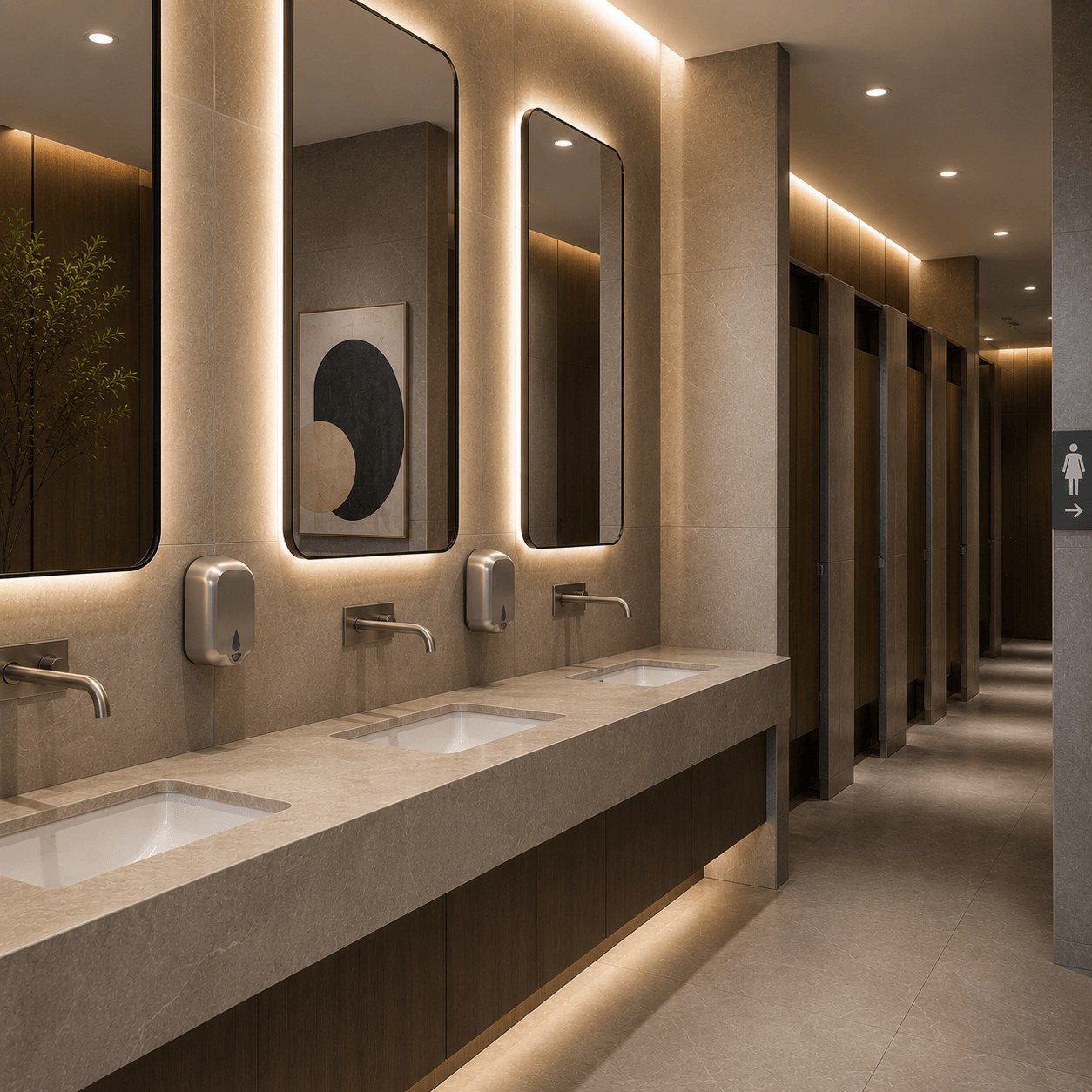
Implementing Automatic Soap Dispensers and Hand Sanitizer Dispensers
Manual pumps spread germs rapidly during peak hours. One great solution is to mount a motion-activated
automatic soap dispenser above every sink. It works excellently, especially when paired with an
automatic hand sanitizer dispenser near the main exit door.
Deploying High-Speed Automatic Hand Dryers and Automatic Tissue Dispensers
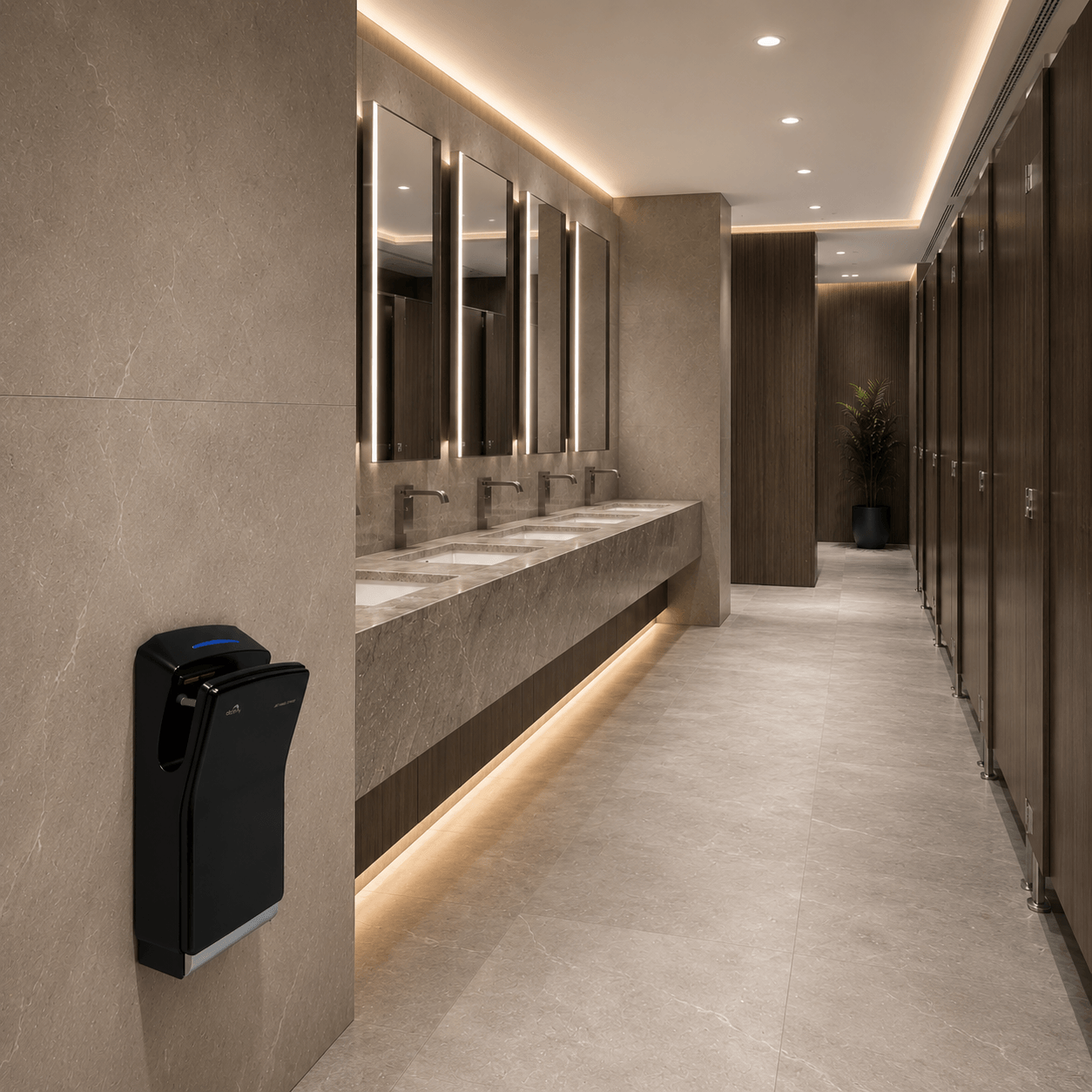
Wet hands attract bacteria much faster than dry skin. Businesses can tackle this risk by installing a high-speed
automatic hand dryer for rapid and contactless drying. And if you want an alternative setup, an enclosed
automatic tissue dispenser provides single sheets without physical contact.
Air Purification via Automatic Aerosol Dispensers
Stagnant air in public bathrooms traps foul smells and invisible germs. Property managers can easily keep the environment fresh by using an
automatic aerosol dispenser. It helps neutralize airborne particles on a set schedule without requiring manual staff attention.
Beyond Automation: Infrastructure and Waste Management Solutions
Integrating a Dedicated Washroom Recessed Panel and Waste Receptacle
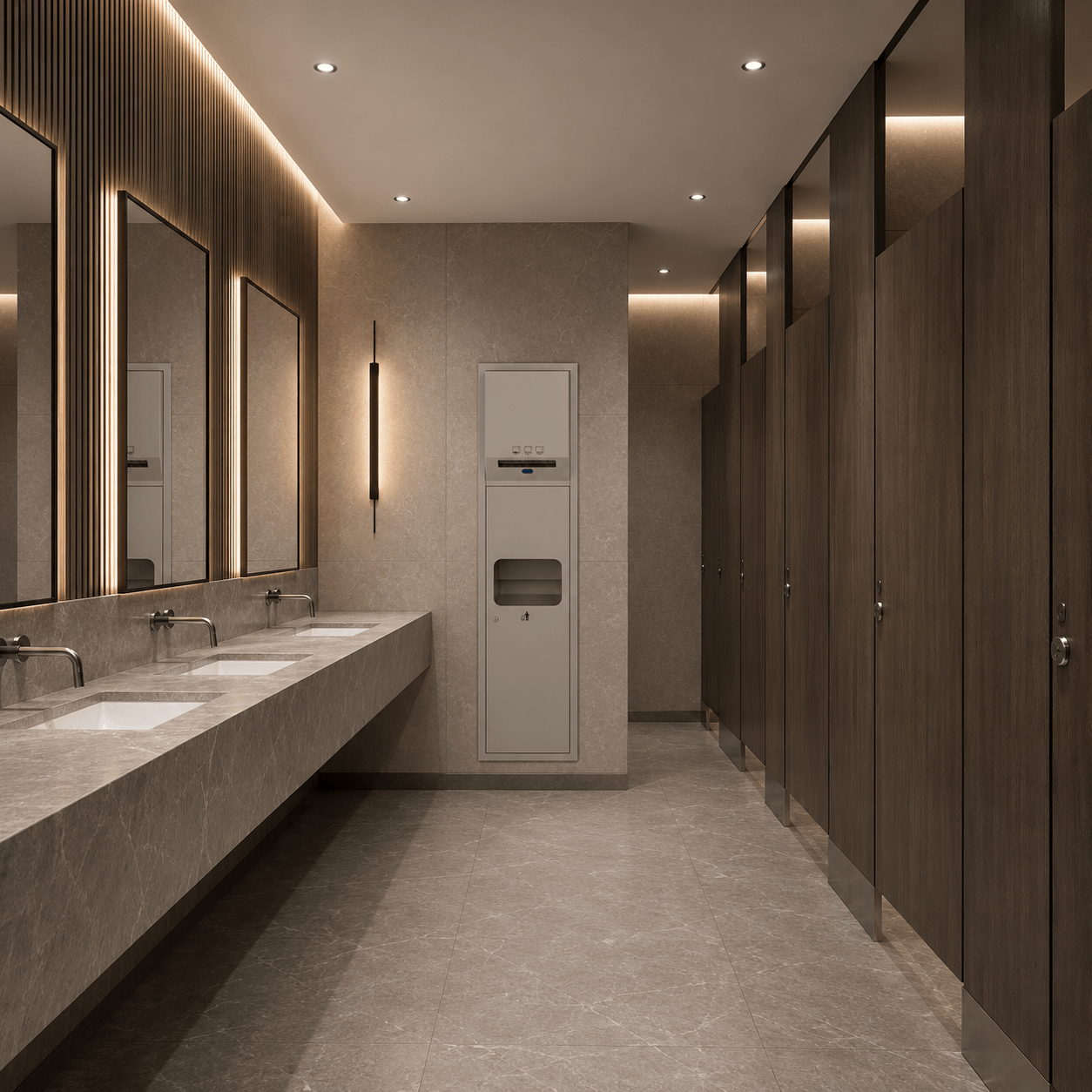
Overflowing bins and messy paper towels quickly ruin the appearance of a restroom. You can save floor space by embedding a sleek
washroom recessed panel into the wall structure. This integrated fixture safely conceals a large
waste receptacle to keep trash off the floor.
Safe Disposal via Sanitary Napkin Disposal Machines
Individual cubicles that are exposed to biological waste have serious odor issues and health hazards. A dedicated
sanitary napkin disposal machine offers a secure, closed containment method. This system protects your maintenance staff from cross-contamination.
Improving Shared Toilets with a Toilet Seat Cover Dispenser
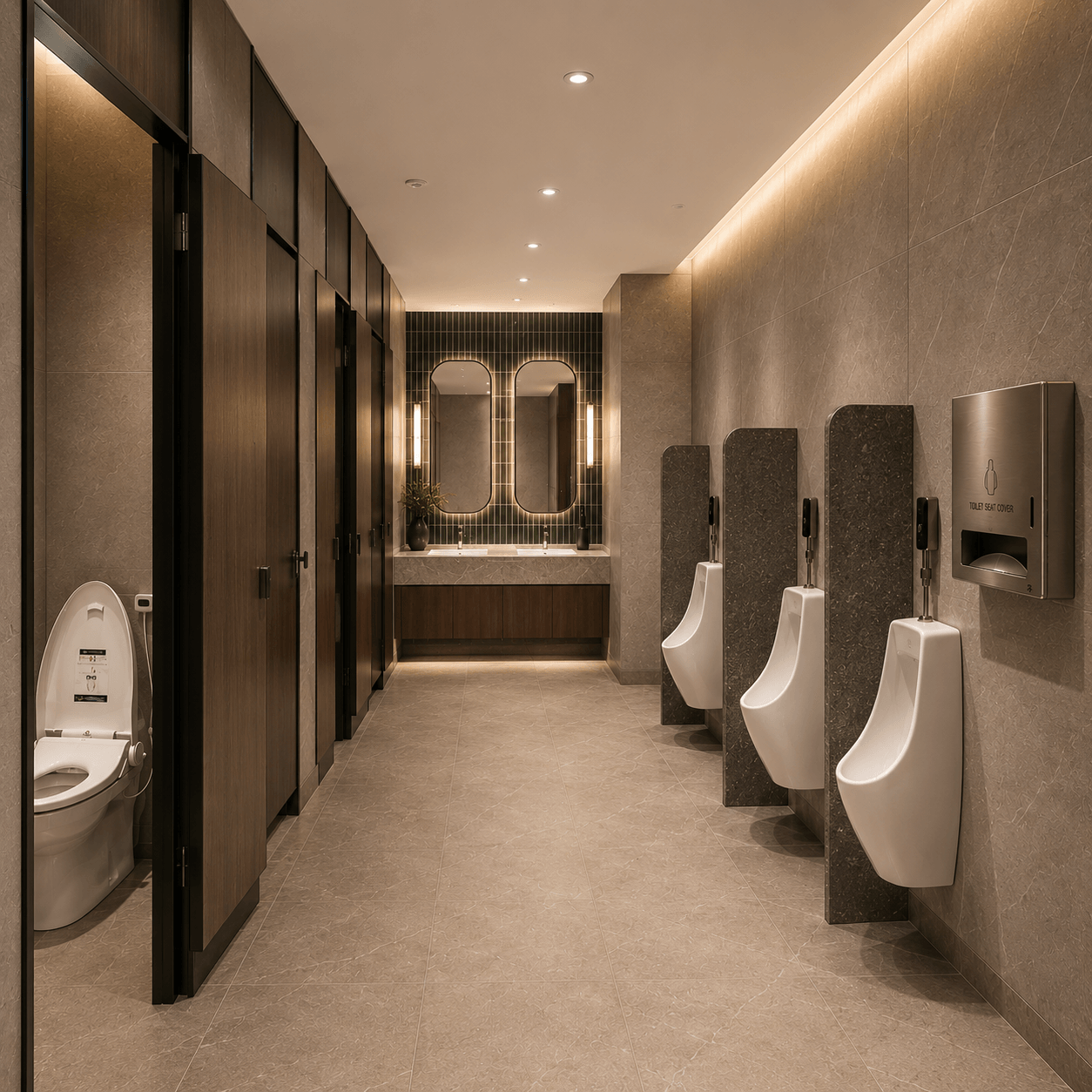
Direct skin contact with shared toilets creates intense hygiene anxiety for many visitors. A wall-mounted
toilet seat cover dispenser inside each cubicle provides flushable paper barriers. You can also add
automatic urinal flushers alongside it to ensure total toilet sanitation.
The Bottom Line: Transforming Public Washrooms with Dolphy
Managing public restrooms presents continuous challenges with heavy foot traffic, bad ventilation, and poor waste containment. This is why every property manager should upgrade their facility with touchless washroom products to ensure a cleaner and safer environment for everyone.
And, if you are ready to upgrade, Dolphy provides a variety of durable automation solutions that are designed specifically for high-traffic commercial spaces. Contact our team today to modernize your facility and elevate your public restroom hygiene.
Most Popular Washroom Automation Products for Modern Spaces
Health Faucet |
Handicap Grab Bar |
Toilet Paper Holder Stand |
Concealed Flush Tank ,
Sanitary Napkin Disposal Machine |
Hair Dryers
Frequently Asked Questions (FAQs)
What are the most common public washroom hygiene challenges?
High-touch surface contamination, poor ventilation, and poor waste containment are some key challenges. Additionally, heavy daily foot traffic and improper user habits quickly multiply germs on manual faucets and flush buttons.
Why should commercial buildings switch to smart washroom technology?
Automated washroom solutions eliminate physical touchpoints to stop the spread of harmful bacteria immediately. This modern upgrade also cuts down on water consumption and lowers long-term property maintenance costs.
How does clinical waste management improve public restroom safety?
Dedicated disposal systems isolate hazardous materials and bad odors inside individual cubicles. This kind of containment prevents cross-contamination and protects your building maintenance staff from biological health risks.
How can a property manager prevent bad restroom ventilation and odors?
Exhaust fans and aerosol dispensers work together to neutralize airborne particles. These tools remove the root cause of odors instead of hiding them with basic air fresheners.


 Reference Library
 Specification Sheets
 Educational Videos
 Green Initiative
 Case Study
 Whitepaper
 Warranty Statement
